



 Safety Helmets & Face Shields



Brazing Rod

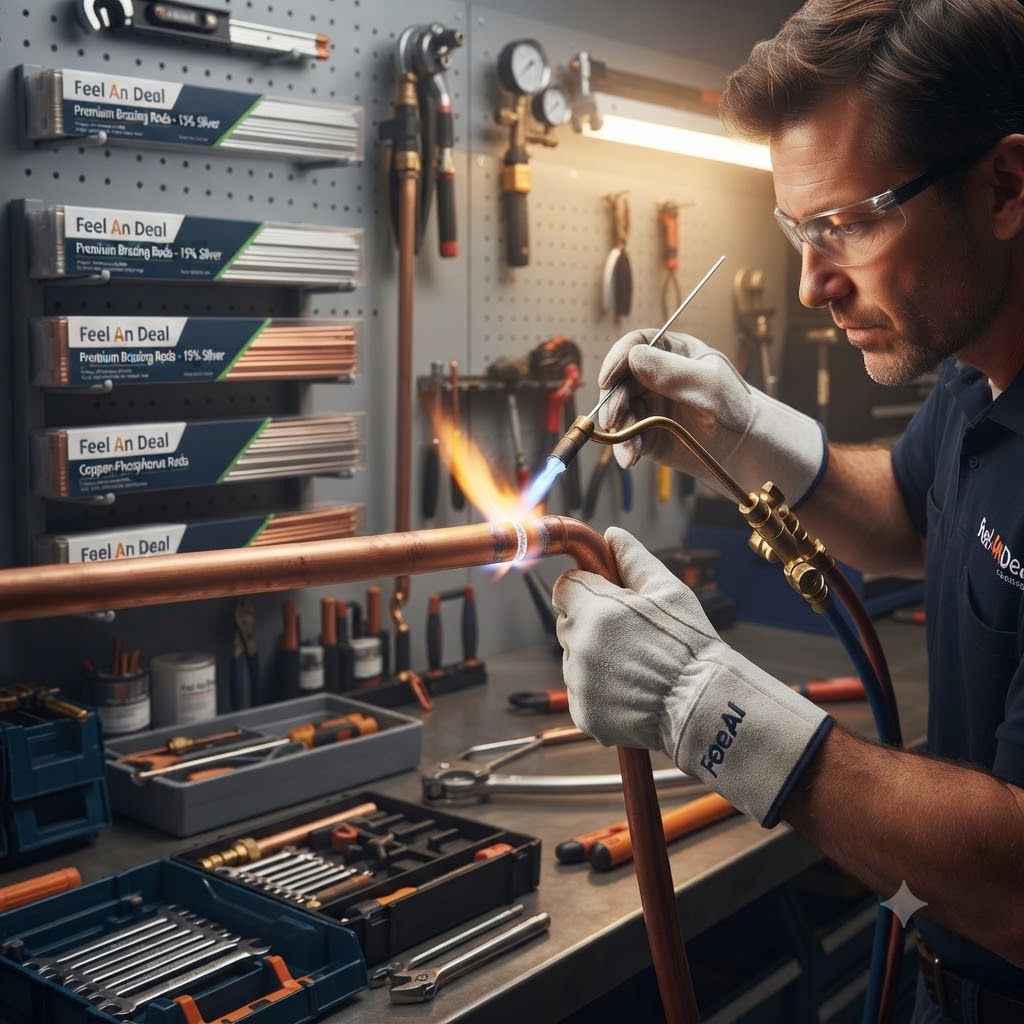
How to Choose the Right Brazing Rod for AC & Refrigeration Systems: A Complete Guide
When working on air conditioning and refrigeration piping systems, selecting the correct brazing rod is critical to preventing costly refrigerant leaks, joint failures, and system breakdowns. Because AC and refrigeration units operate under high pressure and temperature fluctuations, a standard weld will not hold.
This complete guide breaks down everything you need to know to choose the right brazing rod for your HVAC projects.
1. Understanding the Basics: Brazing vs. Soldering
Before choosing a rod, it is important to clarify the terminology:
- Soldering is generally used for low-pressure applications (like domestic water lines) and uses filler metals that melt below 450°C.
- Brazing is required for HVAC and refrigeration systems because it involves higher temperatures (above 450°C) and creates a much stronger, capillary joint capable of withstanding extreme refrigerant pressures and vibrations.
2. Key Factors to Consider When Choosing a Rod
- Base Metal Compatibility: The type of metals you are joining dictates your filler material. In refrigeration, you are primarily joining copper-to-copper, copper-to-brass, or copper-to-steel components.
- Melting Point & Liquidus Range: The rod must melt at a temperature lower than your base metals to avoid melting the pipes, but high enough to withstand the operating heat of the system.
- Joint Clearance: Proper capillary action requires the right clearance between pipes. Some rods flow better into tight spaces than others.
3. Categories of Brazing Rods for AC & Refrigeration
A. Copper-Phosphorus Alloys (BCuP Series)
These are the most popular rods for copper-to-copper joints in HVAC installations.
- Properties: They are self-fluxing when used on pure copper (meaning you do not need a separate flux paste), because the phosphorus acts as a fluxing agent.
- Common Grades:
- BCuP-2 (Low Silver / 2%): Economical, good for vibration-free copper joints.
- BCuP-5 (High Silver / 15%): Highly recommended for commercial AC and refrigeration units because the higher silver content provides superior ductility and strength to handle system vibrations and thermal expansion.
B. Silver-Based Brazing Alloys (BAg Series)
When you are joining dissimilar metals—such as copper to brass, copper to steel, or stainless steel components inside a compressor or valve assembly—phosphorus alloys will not work and can create brittle joints.
- Properties: These require a separate, high-temperature matching flux paste. They offer high tensile strength, excellent corrosion resistance, and great elongation properties.
- Usage: Ideal for service valves, filter driers, and steel-bodied components in refrigeration lines.
4. Step-by-Step Selection Guide Based on Application
- Copper Pipe to Copper Pipe (Suction & Liquid Lines):
- Best Choice: 15% Silver Copper-Phosphorus Rod (BCuP-5). It handles vibration from the compressor better than low-silver alternatives.
- Copper to Brass Fittings (Service Valves / Sight Glasses):
- Best Choice: Silver-based brazing rod (35% or 45% BAg) paired with an active silver-brazing flux paste.
- High-Pressure Industrial/Commercial VRF Systems:
- Best Choice: High-silver content rods to ensure the joint flexes safely under high-pressure R-410A or R-32 refrigerants without cracking.
5. Pro Tips for Flawless HVAC Brazing
- Clean Thoroughly: Use emery cloth or a wire brush to remove all oxidation, oil, and dirt from the pipe surfaces before heating.
- Use Nitrogen Purging: Always flow low-pressure dry nitrogen through the copper pipe while brazing. This prevents internal scaling and soot buildup, keeping your expansion valves and compressors clean.
- Heat Control: Heat the heavy fitting evenly first, then draw the flame toward the tube, feeding the rod into the joint via capillary action rather than melting the rod directly with the torch flame.
